Thursday, September 17, 2009

Rochester - A Woman's Man


Jane Eyre is my mothers favorite novel. I had tried to read it when I was fourteen but I got stuck in between the fire of the bedclothes and the great Rochester house party. I knew the story well enough though. My mother owned the two vhs set of the Timothy Dalton version from the 1980s. As a child, I was fascinated when the crazy Mrs Rochester's refused Mr Rochester's help, and with a maniacal laugh, threw herself from the burning building and onto the ground below. I didn't understand most of the movie, but I understood she was crazy and that even though he tried to marry another while bound to her, he still risked his life to save her when all hope of a true marriage seemed to elude him.

When I heard Masterpiece Theatre was going to show a new version of Jane Eyre, I thought Oh, good, I hope it's close enough to the book for mom. I didn't watch it, and when I asked her about it, she, fuming slightly, said it still wasn't good enough. I took her at her word and didn't watch it.

One day, as I perused the internet, I found that someone had uploaded the entire 'newer' version of Jane Eyre. I thought Well, why not? and the next few hours flew by. The beginning was something I could almost recite from memory. All the way up till Mr Rochester appeared. And something snapped. Toby Stephens recreation of Rochesters character was...mesmerizing. The end of the first episode I was intrigued. The end of the second made me yearn for more. The third episode I was almost dying to see Rochester again. Forget this St John guy, bring back Rochester! Before the end of the fourth I was itching to get to my mothers room and find the copy of Jane Eyre that I had so thoughtlessly put down years before.

I had read all of Jane Austen when I was seventeen. Of the classics I had read Tolkien, Wilde, Forster, Eliot, James, and of the modern I had read L'Engle, Harry Potter, Twilight, Susan Cooper, and nothing, nothing reached out to me and touched me in the way Jane Eyre did. I was astounded. My younger sister rebuked me for not paying attention to her when she said that I should read it because of its sheer awesomeness.

I think I wasn't able to appreciate Rochester's un-Darcy like appeal. Our household was brought up with Pride and Prejudice from the time I was seven. We watched the A&E version at least once a year, even when it was six vhs tapes. I remember my mother popping in one of the tapes while ironing to make the time go by. As I grew older I loved Darcy for his quiet honor. Watching and then reading JE I realized something that was missing from Darcy: dialogue. What Darcy says, he says well but it's never conversation. He's always after something, but for all the right reasons, so he's easily forgiven. Rochester, though, is all about the conversation. Jane almost can't get a word in edge wise. Does it matter? No. Finally, a man who speaks!

I realized after I was in love that Rochester was a woman's ideal version of a man. Perhaps Rochester will never exist in true life, but perhaps that is why JE is such a classic. Jane Eyre is a paragon of a woman, and her life story is a fascinating one. But the story lies, I believe, with Rochester. A rich man with a sinful past, a broken heart, and a dark sensitivity that saw something in a little, plain woman with nothing but her soul to recommend her and makes Rochester a better man than he could have become on his own. He makes the story come alive.

Ahhh...dear reader, the beauty of a novel. To read what one wishes would come true!

In conclusion, if you haven't seen this version of Jane Eyre, I heartily suggest it. It does take some liberties with the story, and there is a five-second moment of adulterous behavior on Mrs Rochester the first's part which keeps me from owning the dvd, but the life Toby Stephens gives Mr Rochester is unlike anything I have ever seen. And believe me, I've looked for it in every single JE I can get my hands own.

5 stars

Monday, August 10, 2009

Forged In The Fire by Ann Turnbull


2 stars

I...really didn't like this book. First off, I accidentally put this on my queue of books to read at the public library. I was actually keeping it there to remind myself to check out the first book in the trilogy (this is the second). Somehow, it got put in my stash of books so I read it anyway.

Historically speaking, it's ok. The characters are young Quakers who are persecuted in the 17th century. The second book starts off in the middle of a courtship carried on through the letters of Susanna and Will, having only seen each other twice. Will was imprisoned in the first book and was just getting out when this book starts up. He heads off to London to find work, which he finds, but he also finds the bubonic plague and he himself gets thrown in jail and gets sick with ague.

Susanna and Will seem to have a Romeo-Juliet romance going on. His father is against their romance and all Quakers to boot, Susanna is far away from London, Will loses his job, plague kills 100,000+ people, etc. Susanna comes to London, and after a brief misunderstanding, they ahem, 'rekindle' their romance, and sleep together.

As a Christian, this is appalling and exactly why I don't like going into the Teen section of either the Library or Barnes and Nobles. Why do authors feel the need to put this in books? Do they want kids to have sex thrown in their face every which way they turn?

I'm not saying it never happened. Two young Quakers barely in their twenties, in love and anxious to be married, alone in his room, sure, it could have happened. But must our daughters know about it? Is there nothing sacred?

The topics this book brings up are persecuted church of the Quakers, the plague, the great fire of London, and unrequited love.

Writing: 3 out of 5
Morals: 2.5 out of 5
Plot: 3 out of 5

From a Christian's view point, this book is a pass.

Tuesday, August 4, 2009

More Catherine Cookson

I've seen a gagillion movies recently, all waiting to hear my personal opinion of them. Since it's more than one movie, I'll try and condense the plot where I can.

The Dwelling Place
This one started out interesting. Parents die, their seven children are forced out on their own. Find cave, build 'dwelling' around cave, children go off to work, and the handsome young man in town is in love with main girl, Cissie. There's a catch; handsome young man is dirt poor. So he marries the mill owners daughter, inherits the mill to make money to send to Cissie and the children and then hires some of Cissie's brothers. Another catch, Cissie gets raped by rich young man while his evil sister eggs him on. In front of Cissie's youngest brother.

Yeah. It gets a bit weirder...

Fast forward a bit: Rapist is sent to sea, Cissie becomes pregnant and has a son but ends up giving him to the rapist's family. Fast forward a bit more: Rapist comes back from the sea, finds he has a son and does everything in his power to restore the baby to Cissie. Cissie gets her son back (evil sister is shot somewhere in there), but when the now four-year old boy says 'I don't like you' to Cissie, she immediately returns him to the Rapist's family where he can be with people he likes.

AND THEN. Rapist goes to the Dwelling Place to ask Cissie why she gave him back. Then asks if she ever loved the handsome Mill guy from the begining. Then asks if she could ever love him. At which point my eyebrows skyrocketed ('?!...but you raped her...?!') into my hairline. There are just some things that should never happen, like any kind of contact with the man who raped you, unless you're testifying against him in court. So then, marriage?! Can you imagine what they'd say to people who asked how they met? 'Oh well one day I was walking with my sister and I saw this girl and raped her in front of her little brother. She gave birth, my father bought the baby from her, and when I tried to give the baby back to her, my sister tried to take him back again. So I shot her. It was magical.'

2 Stars

Wingless Bird
This one was kind of iffy. It's probably one of those book to movie transitions that didn't work out very well but still got the point across. Girl has hard parents and works in their shops. Father has affairs with other women. Mother is a bitter hag (no seriously, I'm not being mean). Sister is in love and pregnant. Father dies, Sister marries father of baby, Mother becomes more human, and Girl falls in love with rich boy she meets in shop. Boy gets pneumonia and stays in Girls house. He never fully recovers, they get married, he is still sickly and eventually dies. Then comes the slightly weird part. The Boy has an older brother who goes into the war (WWI) and half his face is burned off. Turns out he's in love with Girl as well, but doesn't say anything until after the Boy dies.
Then there's a law about not marrying brother's widows or something, so they don't get married. All of a sudden you see a photograph of the two of them, much older and several children around them outside a church and you can hear the two of them laughing about living together, having kids and getting married twenty (thirty perhaps?) years later. Credits roll. The end. VERY unexpected ending.

3 stars

Glass Virgin
Really didn't care for this. I've heard a lot about it, but I found it pretty boring. If the lead had been different, I might have liked it more. Emily Blunt's early years seem to be pretty lackluster (to me anyway). The man she falls in love with is played by Laura's father in Lark Rise to Candleford, and is still way older than Blunt's character.

2 stars


Round Tower
Remember Georgiana Darcy from P&P 95? She plays the main girl Vanessa. Remember Sir Timothy from Lark Rise to Candleford? He plays Angus. This one starts out really weird.
To make a long story short, Vanessa is not loved by her parents. She seeks consolation and someone to chat with and finds a friend in their neighbor, Brett, who is the same age, if not older than, her father. So...one thing leads to another, and Vanessa is pregnant. With Brett's baby.

Another eyebrow-skyrocketing moment? You betcha.

Brett goes on trip, Vanessa's parents are upset when they find out she's pregnant and map out a plan of how to get rid of the baby without anyone knowing, uncaring whether Vanessa wants the baby or no. Brett comes back from trip, Vanessa tells him she's carrying his baby, and he hangs himself. Vanessa runs away, and Angus, who has always liked her, finds her and convinces her to marry him. The rest of the movie is all about their ups and downs as a married couple, and ends ok. However, the begining makes it hard for me to recommend to anyone.

2 stars

Saturday, July 25, 2009

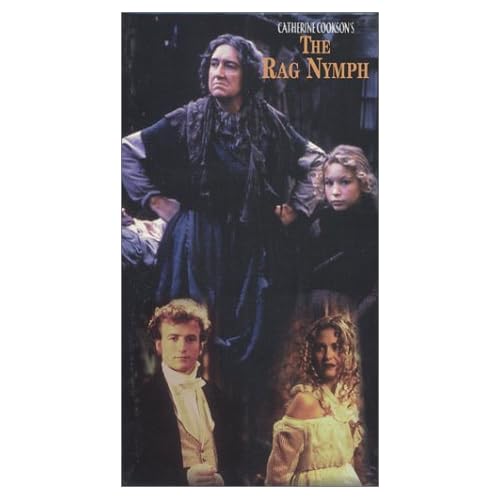
Rag Nymph

5 stars
Read the Story

I've recently become a fan of Catherine Cookson's tv films. So far I've seen
The Girl
Tilly Trotter
The Moth
15 Streets
I've found them to be very engaging stories, unlike some other period dramas that have a hard time getting started. Sometimes they end oddly too, and content is always something to be on the watch for. For all that, I enjoy them immensely. Today, I finished The Rag Nymph.

A woman is jailed with the crime of 'prostitution'. It was unclear whether she actually was a prostitute, (I don't think she was), but she is bailed out of jail by a pimp (did they use that word back then?) named Boswell and is taken to his 'house'. Instead of letting herself be used, she hangs herself, leaving her daughter Millie an orphan. She's taken in by a Ms Aggie, a kind elderly woman with no family of her own, rather poor, save a teen (I suppose he's a teen) boy named Ben. Ben turns out to be a good, kind boy who is constantly after Aggie to keep Millie, and grows up to be a good, kind man who falls in love with Millie.

Boswell, however, is always on the lookout for the child of the woman who cheated him. Ms Aggie is constantly find ways to keep Millie protected from Boswell, such as sending her to a boarding school, a governess position, a friends house, etc. As it usually is, beautiful people attract trouble. At a party, a clearly perverted man flirts with Millie, and his jealous wife sets her sons on Millie. A rather wealthy young man, Mr Thompson, whom she had danced with earlier in the evening comes to her rescue (along with the perverted man). As Mr Thompson falls in love with Millie, Ben becomes more and more agitated, especially after Millie sees his back and realizes that he's a crippled (I'm sure the first word that describes him in the book is criple, but it was hard to tell in the movie until you saw him with his shirt off. Then it's clear there's something wrong with his back).

Mr Thompson shows Millie his house and inadvertently lets slip that they can never be married, but wants to remain lovers. Millie will have none of that ('My mother hung herself before she was used!') and walks home by herself. She accepts a ride from a man she doesn't know (never a good idea) and does not recognise the man sitting next to her, but he seems familiar. The audience knows immediately who it is: Boswell the 'pimp'.

Ben, worried about Millie, goes to Mr Thompson's house. Not finding her there, he continues to search for her, but it's his cousin who works for Boswell that finds him first. She sneaks him into Boswell's 'establishment' to rescue Millie, who has been drugged and in her underclothes, waiting for her 'client'. Ben meets Boswell on an empty stairwell on his way to Millie and fatally stabs Boswell. Millie's client is the perverted man from the party, and he is also stabbed to death by Ben, but not before turning the knife on Ben himself.

Millie hurries Ben home, and Aggie goes for a doctor. As Millie's watching over Ben, he tells her he loves her. She doesn't accept him immediately, but when Mr Thompson comes calling to propose to her she flatly refuses him, saying she's engaged to Ben.

Ben turned out to be one of my favorite men from any movie. He's good and kind to Millie and Aggie, and while he's had almost no schooling, he goes back to school to better himself and eventually becoming a teacher. There's nothing he won't do for Millie, and always tries to do what's best for her and Aggie.

Some of Cookson's books-to-novels end strangely, such as Tilly Trotter, where the girl not only doesn't get married to who you thought she loved all along, but ends up her master's lover. The Girl also ended oddly, although admittedly it was better than Tilly.

The Rag Nymph and 15 Streets seem to be my favorites so far. The romantic leading men are wonderful, not too gushy and aren't above fighting for what's right, and the women aren't the obnoxious women you see far too often in movies and tv nowadays.

All in all 5 stars!

Wednesday, July 22, 2009

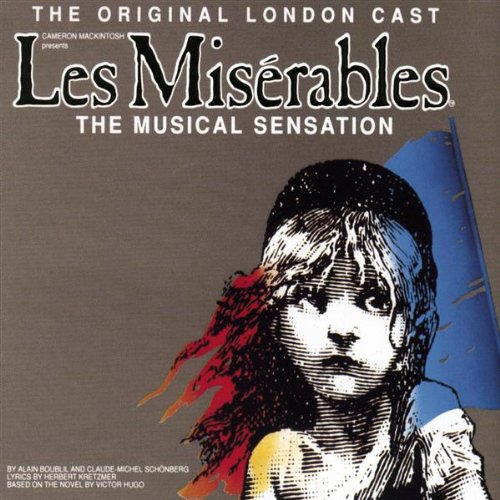
Les Mis Original London Cast

5 stars
Read the story
I really like musicals. I mean really really like, musicals. Especially Broadway musicals. I find there's something very attractive about stories set to music. I don't know why, but I'd much rather go see a musical than a regular play and/or movie.

The first Broadway musical I fell in love with was Wicked. Then Crazy for You, then Rent, but then came Susan Boyle and Jamie Pugh on Britain's Got Talent. Both of them turned out to be amazing singers, but what struck me was that both songs were beautiful and from the same source: Les Mis.

I considered buying it for about a week or two. Did I really want it? In the end I decided it was worth it. Little over a month later I still can't get over how much I love this play.
There are some songs that touch my soul and send shivers up my back: I Dreamed A Dream, Red and Black, Do You Hear the People, One Day More, On My Own. Then there are the songs that are just really catchy, and not in a bad way: At the End of the Day, Lovely Ladies, Master of the House, Little People.

The few problems I have with this recording are purely based on the vocal talents of some of the singers. Eponine for instance...what the heck? Woman's got range, but her actual voice grated on my nerves the first few times I heard her. Cosette is boring, and Fantine is eh (which sounds like Broadway sacrilege when you realize that it's Pattie Lupone's voice your finding fault with). After a few listens, however, Eponine's voice became less grating and more in character with the picture I had of her in my mind. Spoiled, wretched, ragged, and as wikipedia says, '"pale, puny, meagre creature," with a voice like "a drunken galley slave’s."' Fantine also became slightly more appealing, but I'm afraid Cosette may always be rather boring.

The outstanding voice is Colm Wilkinson as Jean Valjean. Marius, I believe, is played by Michael Ball, who is also fantastic. The amazingness of their voices more than make up for Cosette's lackluster performance (especially since she only sings in three songs), not to mention the acting performance of those two that you can not only hear, but in your mind's eye, you can imagine!
Another fascinating aspect is the spirituality of the lyrics:

(Bishop to Valjean) And remember this, my brother/See in this some high plan/You must use this precious silver/To become an honest man/By the witness of the martyrs/By the passion and the blood/God has raised you out of darkness/I have bought your soul for God.

(Valjean) Yet why did I allow that man/To touch my soul and teach me love?/He treated me like any other/He gave me his trust/He called me brother/My life he claims for God above/Can such things be?/For I had come to hate the world/This world that always hated me/Take an eye for an eye!/Turn your heart into stone!/This is all I have lived for!/This is all I have known!

(Valjean) My soul belongs to God, I know/I made that bargain long ago/He gave me hope when hope was gone/He gave me strength to journey on

All in all, I love and adore this musical. It's hard to believe that it's only been a month and a few days. One month...

The rain can't hurt me now
This rain will wash away what's past
And you will keep me safe
And you will keep me close
Buy the album!


Intro

This is so I can keep a record of why I like/dislike something. Books, music, movies, electronics, etc.

:]